
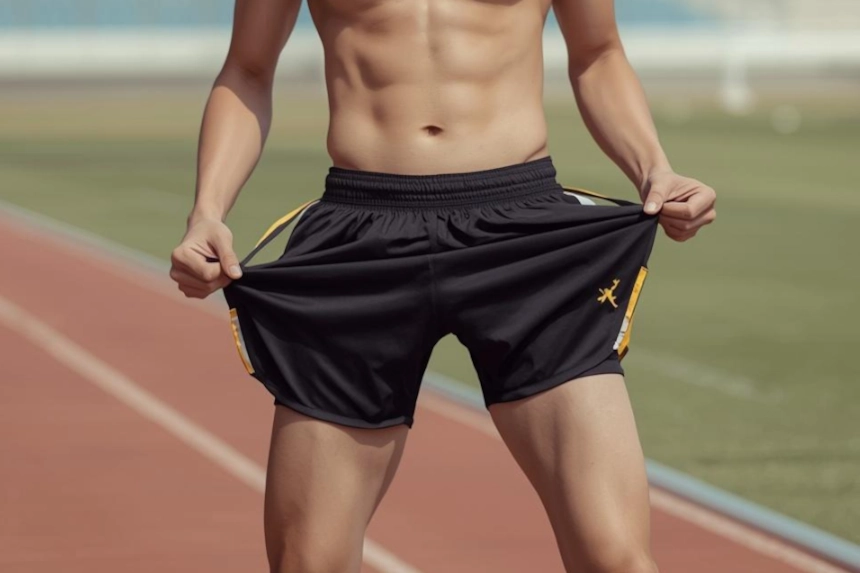
Gymnastics shorts have a long history, linked to the liberation of the body and the professionalization of sports. In the 19th century, sportswear was often worn like everyday clothing, and long trousers were common. It wasn’t until the founding of gymnastics clubs in the early 20th century that short sportswear became popular, initially only for children and teenagers.
In fact, the development of sportswear reflects not only technical and practical advances, but also social norms and values, particularly in relation to physicality, sense of shame and sports culture.
Its history shows how clothing reflects societal shifts, from the strict modesty of the 19th century to today’s queer empowerment. Whether in the gym, at the Pride parade, or in a club, it remains a symbol of play, provocation, and the power of self-expression.
Key milestones and developments:
19th century: Traditional sportswear
- Material and cut: Long trousers or knee-length breeches made of heavy fabrics such as wool or linen were common. This clothing was designed more for modesty and social conventions than for freedom of movement.
- Context: Sport was often an elite or military-influenced activity. Clothing was primarily intended to appear “respectable.”

Early 20th century: First steps towards change
- Gymnastics clubs and freedom of movement: With the spread of gymnastics clubs (especially in Germany through Friedrich Ludwig Jahn), awareness of the importance of freedom of movement grew. Nevertheless, shorts initially remained the preserve of children and teenagers.
- Social acceptance: Adults continued to wear longer trousers, as shorts were considered “improper.”
1920s–1930s: Breakthrough of short gym shorts
- Influence of the Olympic Games: The professionalization of sports and the Olympic Games fostered the development of functional sportswear. Shorts became increasingly accepted as they improved performance.
- Material innovations: Lighter fabrics such as cotton or silk allowed for greater freedom of movement and ventilation.
- Cultural change: The “New Objectivity” movement and the rise of physical culture (e.g., through movements like the “Life Reform” movement) contributed to shorts becoming socially acceptable for adults as well.
After 1945: Sportswear as a symbol of modernity

- Globalization of sports: International competitions and media have made short gym shorts the standard – in both recreational and competitive sports.
- Fashion and everyday life: The line between sportswear and leisurewear has blurred. Shorts have also been worn outside of sports, for example, in leisure time or as part of youth culture.
Interesting side notes:
- Gender roles: Initially, women often wore long skirts or culottes while playing sports. The acceptance of shorts for women developed later – in parallel with the women’s liberation movement.
- Political instrumentalization: In some countries (e.g., under National Socialism), sportswear was also ideologically charged to promote body image and “health.”

From the gym to the street: Gym shorts in fashion
- 1980s–1990s: Gym shorts became a symbol of youth culture, especially through hip-hop and breakdancing. Brands like Adidas and Puma transformed them into a lifestyle product.
- Streetwear Revolution: Today, gym shorts are a staple of casual fashion—often paired with sneakers and oversized shirts.
- Gender Fluidity: The boundaries between “masculine” and “feminine” sportswear are increasingly blurred. Gym shorts are now worn by everyone.
The short gym shorts in the queer scene
The short gym shorts have an interesting and multifaceted history in the queer scene, closely linked to physicality, self-expression and breaking with social norms.

Early 20th century: Sport as a space of freedom
- Gymnastics Clubs and Homosexuality: Queer subcultures existed even in the early gymnastics and sports clubs of the 19th and 20th centuries. Sport offered a relatively safe space where men* could move freely and experience their bodies—even beyond heteronormative expectations.
- Body Culture and Aesthetics: The emphasis on the (male) body in the gymnastics movement created an aesthetic that was later adopted by queer communities. Gymnastics shorts became a symbol of physical liberation.
1970s–1980s: The coming out of gym shorts in the gay movement
- Gay liberation movement: In the 1970s, sports—and thus gym shorts—increasingly became a political statement. Gay sports groups (e.g., in the USA or Western Europe) used sportswear to protest discrimination and create queer visibility.
- Fetish and subculture: In the leather scene or BDSM communities, gym shorts (often made of leather or tight-fitting) became a fetish object. They stood for dominance, athleticism, and a conscious performance of masculinity*.
- Pride and provocation: At Pride parades or queer demonstrations, activists often wore gym shorts—as a sign of pride and as a provocation against bourgeois dress codes.
1990s–2000s: Mainstreaming and queer icons
- Pop culture: Queer artists like Freddie Mercury (in his early years) or George Michael (in the “Freedom” video) wore short gym shorts, thus shaping an image of queer self-confidence and sex appeal.
- Club culture: In queer clubs (e.g., in Berlin or New York), gym shorts became part of the dress code—often combined with mesh shirts, leg warmers, or eye-catching accessories.
- Drag and gender fluidity: Drag artists like RuPaul or Conchita Wurst played with sportswear to deconstruct gender roles. Gym shorts thus became a symbol of fluid identities.
Today: Queer fashion and political statements
- Fashion as activism: Brands like Telfar and Palomo Spain are integrating short gym shorts into their collections and celebrating them as queer fashion icons. Today, gym shorts represent inclusivity and body positivity.
- Sport as a safe space: Queer sports clubs (e.g., LSVD sports groups or queer football clubs) use gym shorts as a symbol of community and empowerment.
- Social media: On platforms like TikTok and Instagram, queer creators are reinventing gym shorts—sometimes as a retro statement, sometimes as part of gender-bending outfits.
Why gym shorts in particular?
- Physicality: It emphasizes the body and breaks with taboos of shame—a central theme in queer struggles.
- Gender roles: It was (and is) often associated with masculinity. Queer people appropriate it to challenge norms.
- Practicality: It is comfortable, functional, and suitable for dancing, parades, or sports—in other words, for spaces where queer culture is lived.
Interesting examples from queer culture:
- Tom of Finland: The renowned cartoonist depicted muscular men in tight gym shorts—an influence that continues to resonate in queer aesthetics today.
- Berlin’s gay scene of the 1980s: In clubs like the “Metropol” or “Trommel,” gym shorts were part of the typical outfit.
- Queer Olympics: At alternative sporting events (e.g., the Gay Games), gym shorts are often worn as a symbol of diversity.
Conclusion
The classic pair of gym shorts is far more than just a simple garment; it’s a small piece with a rich history. It embodies freedom of movement, social change, and queer empowerment. Its history reflects the evolution of sports, body culture, and gender roles, from the strict modesty of the 19th century to today’s queer subculture.
Whether as sportswear, a fetish object, or a political statement, gym shorts remain a symbol of freedom, play, and the power of self-expression.