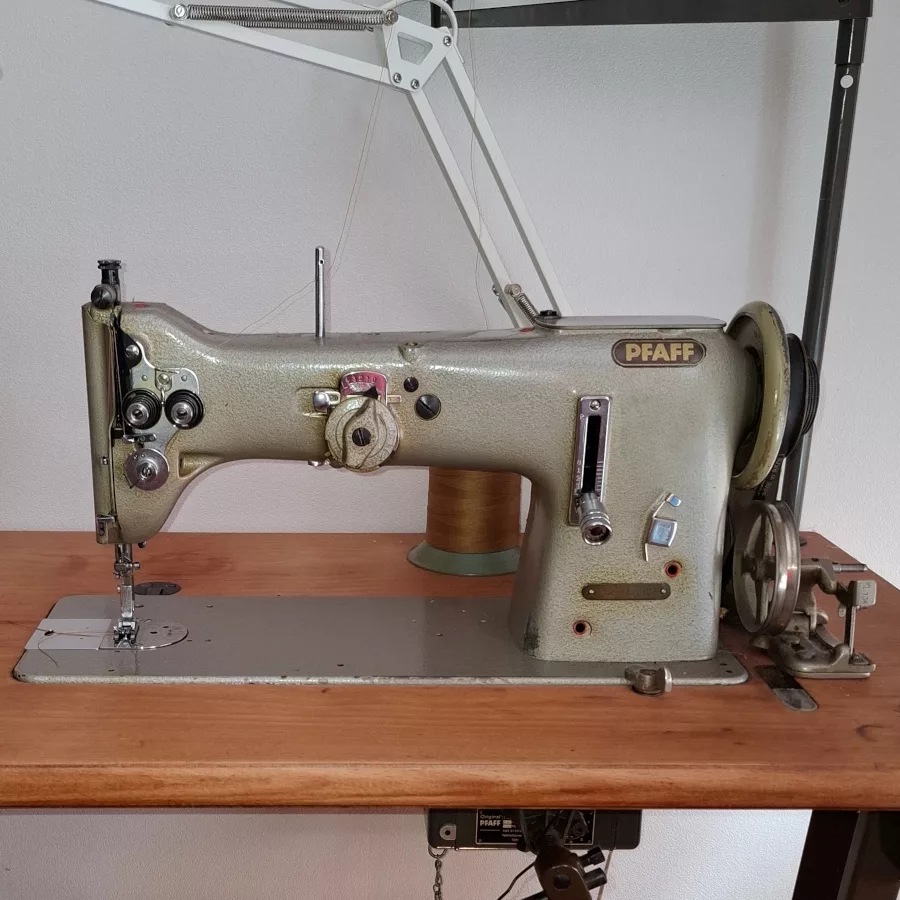
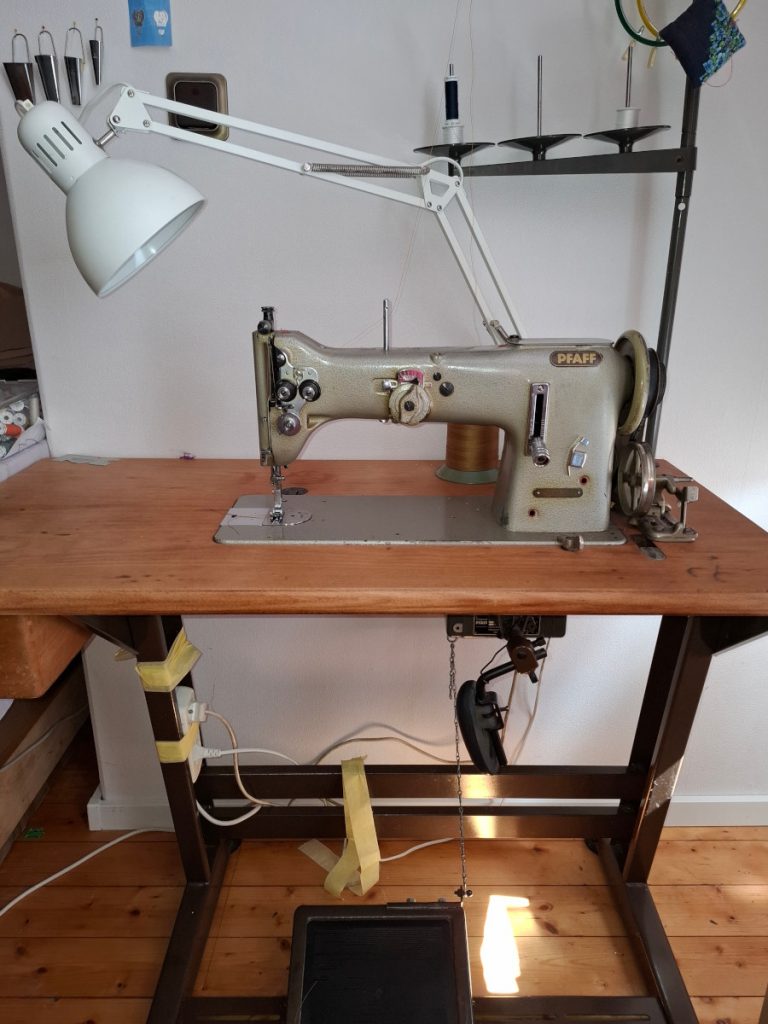
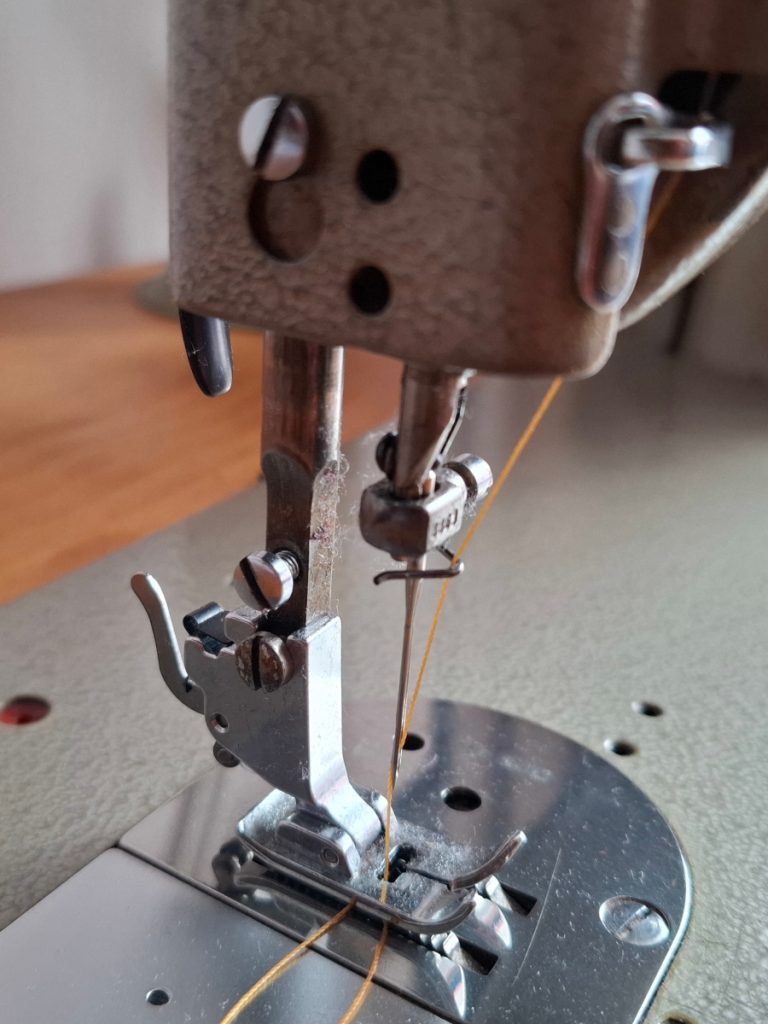
Our first industrial machine, a Pfaff 138. It’s our all-rounder; we use it for everything. Whether it’s clothing or bags, it can handle almost anything that comes under its foot. We mainly use it to sew clothing, pants, shirts, and underwear.
It was built for men’s clothing and can still be found in many tailors’ workshops today. It has earned a reputation as a reliable industrial machine, and many a tailor loves it as much as I do. These machines were built from 1940 onwards and still run perfectly today. Spare parts are also still available without any problems, although the mechanics are considered indestructible.
But the needle plate and hook are wear parts, and even these can still be obtained anywhere without any problems, and at a reasonable price. As you can see, this is a declaration of love for the Pfaff 138.
We got our Pfaff 138 very cheaply; it belonged to an old tailor who continued to sew wedding dresses privately after he retired. He bought it in 1970 and it served him very well. After he passed away at an advanced age, his son put it up for sale and we were able to purchase it. So it moved in with us, and when I eventually pass away, it will move to the next household and continue to fulfill its purpose.
Even though it was loved and well cared for, we made a few changes and adjustments to suit our needs. First, I cleaned it thoroughly with plenty of W30, petroleum, and heat. Once the resinous oil and grease were gone, I treated it to some fresh, resin-free oil. Now it ran freely and smoothly. The first test stitch—what a difference from a household sewing machine. So powerful, and even leather was no problem for it. That was the beginning of our love affair. The first project was a simple pair of shorts. I just wanted to sew—it was such a joy.
A little bit of technology
Thread tension
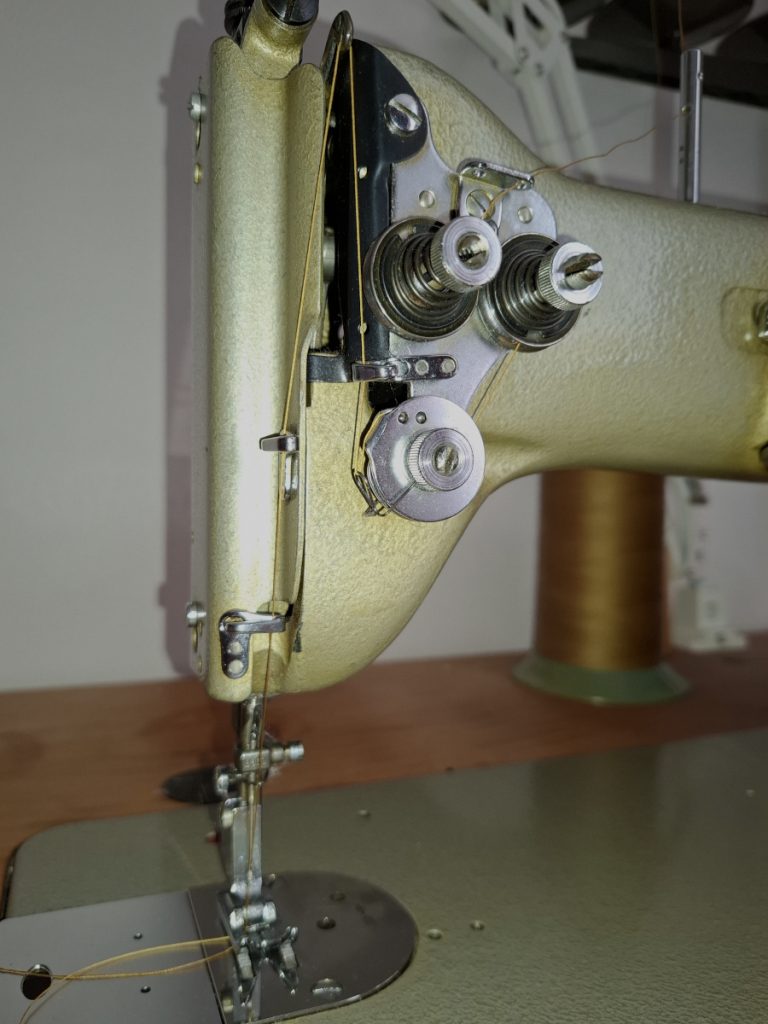
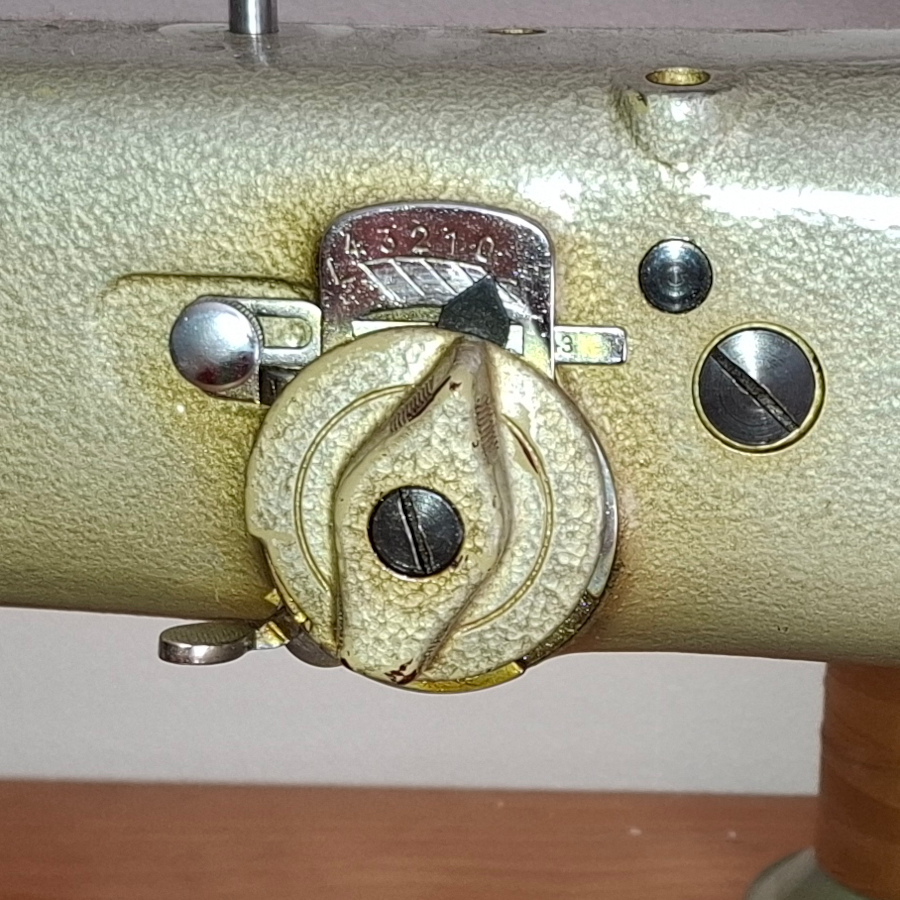
A special feature of the Pfaff 138 is its double thread tension. Until 1955, one of the tensions was intended for piercing, which is still done by all bespoke tailors today. From 1955 onwards, it was used to sew buttonholes.
For piercing, the thread release opens earlier; for the buttonhole, a different thread tension is required.
So the thread tension should have been the target for our machine, but that wasn’t the case. After researching online and contacting Pfaff, the machines could be set up accordingly. We now had the second thread tension for piercing or basting.
Zigzag and needle position
The machine has a zigzag stitch that goes up to 4 mm (at least on my machine). Apparently, there are machines with a 6 mm zigzag stitch, or you can convert them to do this. We haven’t seen any yet.
It is also possible to determine the needle position, which we are happy to do. If we have a 1 cm seam allowance, we can guide the fabric edge along the edge of the presser foot.
Stitch length
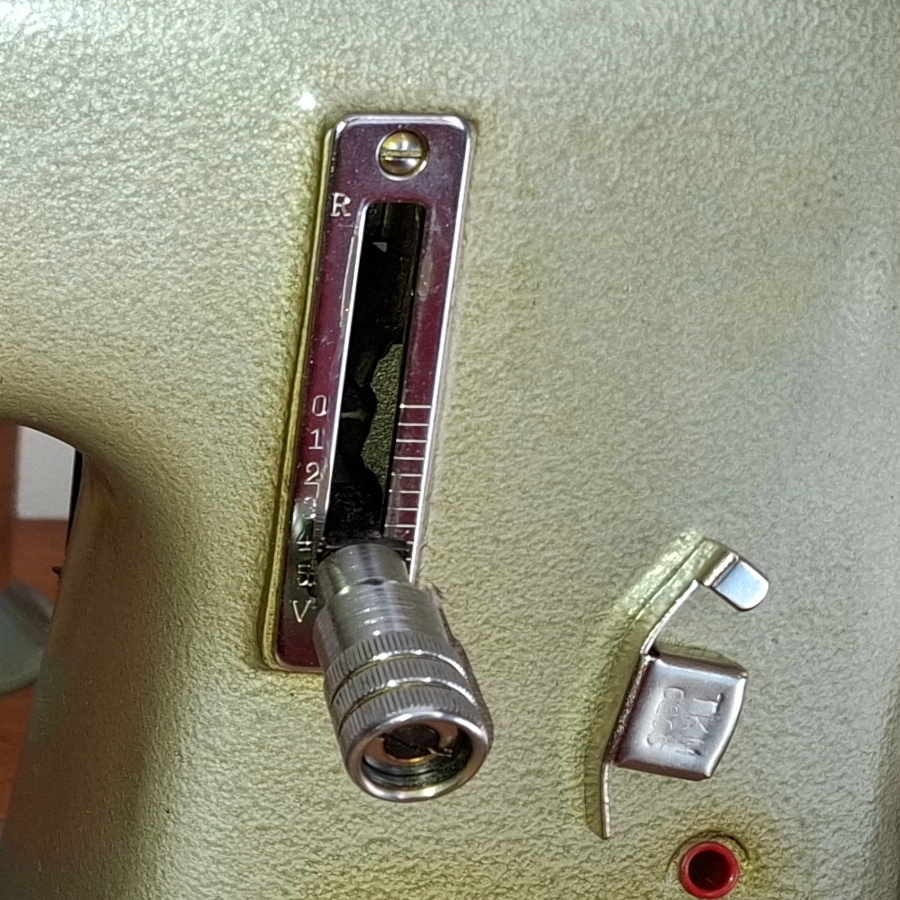
The stitch length is adjusted using the stitch length lever, which is also responsible for reverse stitching. Adjustable stitch lengths range from 0-5mm. This should be sufficient for most standard applications, whether it’s a delicate blouse or a bag.
Foot pressure
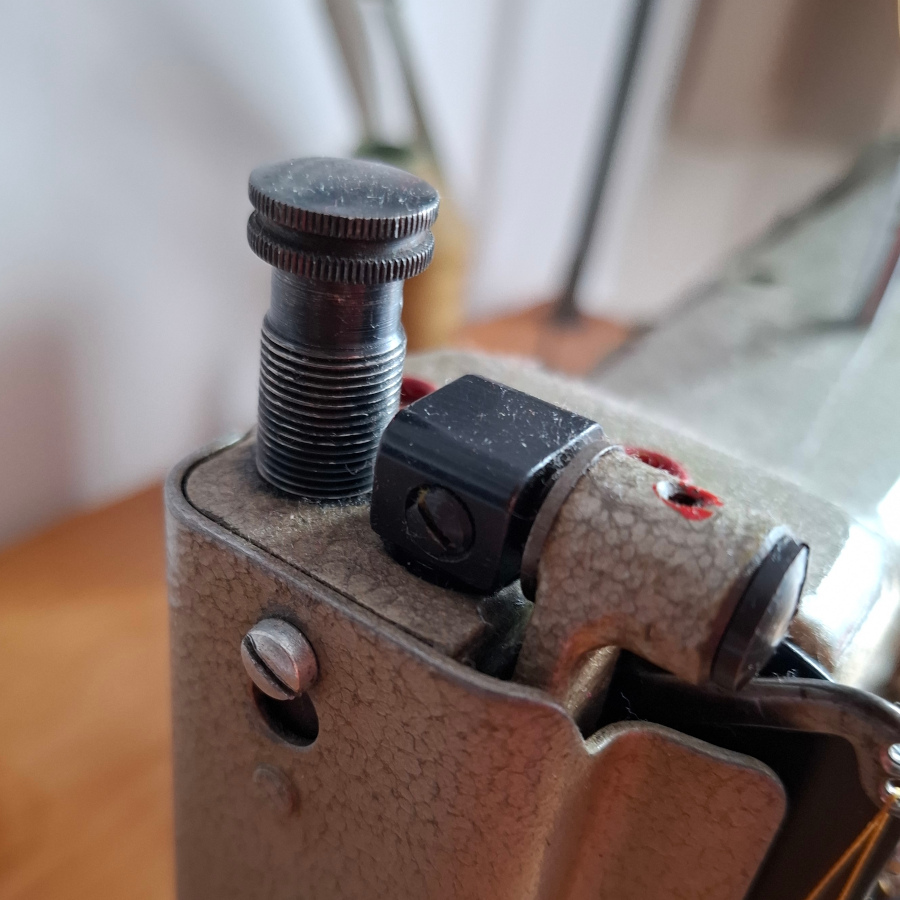
Of course, the contact pressure of the presser foot must also be adjustable. This is done using the adjustment screw, which compresses a spring that then presses on the pressure bar. The spring is replaceable and can be replaced with a stronger one if much more pressure is required, which has not yet happened to me.
When not in use, we turn the screw almost all the way out to relieve the spring.
Presser foot and needle
The needle system—well, there are different versions. My machine has the system that is standard for household machines, the flat piston system 130/705. Converting to the industrial needle system would not be practical for us, as we cannot buy industrial needles everywhere and would have to order them.
There is also a version for sewing rushes with two round-shank needles and a flat-shank system in the middle.
Presser feet for this machine are a special topic; we don’t know of any other machine that is so undemanding when it comes to presser foot selection. There is a separate block for this.
My conclusion
We can recommend this machine to anyone looking for an affordable and reliable industrial machine. You can find this machine online for less than €100, and it is in very good condition. Of course, it doesn’t have a servo motor, but at €100 for an industrial machine, you can treat yourself to a new, modern motor.